# Breaking Down Website Development Pricing in KSA
페이지 정보

본문
Through detailed analysis for a clothing brand, we discovered that emails sent between night time substantially exceeded those sent during traditional business hours, producing one hundred fifty-two percent higher visibility.
Important improvements included:
* Aggressive visual compression
* Content pre-loading based on user behavior
* View reclamation for resource conservation
* Background processing for interaction fluidity
 * Explicitly mark which language should be used in each form element
* Dynamically adjust keyboard layout based on field requirements
* Place field labels to the right-hand side of their corresponding inputs
* Ensure that error notifications appear in the same language as the expected input
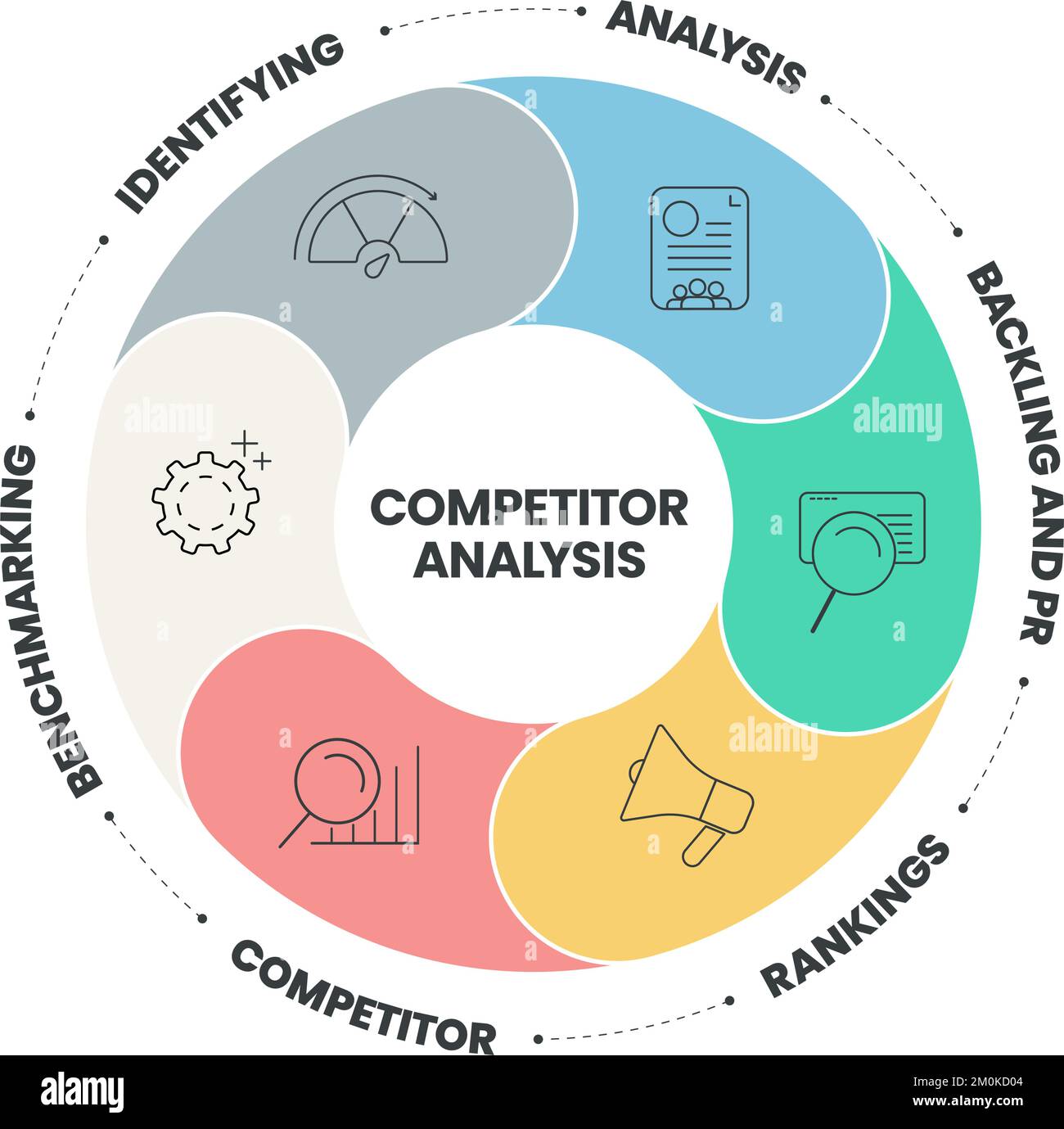
I dedicate at least two hours each regularly reviewing our competitors':
* Digital architecture and navigation
* Content strategy and content calendar
* Online platforms engagement
* Customer reviews and ratings
* Search tactics and positions
 Last quarter, a merchant expressed that their email marketing efforts were generating poor outcomes with open rates below 8%. After implementing the strategies I'm about to reveal, their visibility jumped to 37% and sales grew by over two hundred percent.
Recently, my colleague Sara got quotes varying between 22,000 to 58,000 SAR for basically the same company website. The difference? The more expensive quotes contained custom design elements rather than themed approaches.
I recommend categorizing competitors as:
* Main competitors (offering nearly identical solutions)
* Peripheral competitors (with partial overlap)
* Emerging threats (new entrants with innovative capabilities)
I use a simple spreadsheet to record our rivals' rates modifications weekly. This recently enabled us to:
* Discover seasonal discount patterns
* Detect product bundling tactics
* Understand their value positioning
Recently, I witnessed as three rival SEO Companies Comparison In Riyadh spent significantly into growing their business on a certain social media platform. Their efforts flopped as the channel turned out to be a poor fit for our industry.
* Choose fonts specifically designed for Arabic on-screen viewing (like Dubai) rather than traditional print fonts
* Enlarge line spacing by 150-175% for enhanced readability
* Use right-justified text (never center-aligned for main content)
* Avoid narrow Arabic fonts that reduce the distinctive letter forms
* Developed a numerical presentation system that handled both Arabic and English digits
* Redesigned graphs to read from right to left
* Applied color-coding that corresponded to Saudi cultural meanings
For a financial customer, we implemented a advanced bilingual system that seamlessly adapted layout, controls, and information presentation based on the chosen language. This technique increased their visitor interaction by over one hundred eighty percent.
I currently employ several tools that have dramatically enhanced our competitive research:
* Keyword trackers to track competitors' keyword performance
* Social listening tools to track competition's digital footprint
* Site monitoring solutions to track changes to their online presence
* Communication monitoring to obtain their promotional messages
Essential capabilities included:
* Non-connected content saving
* Background synchronization when internet available
* Obvious display of online state
* Appropriate restrictions of particular functions when disconnected
In my recent project for a investment company in Riyadh, we observed that users were consistently tapping the wrong navigation options. Our user testing revealed that their focus naturally progressed from right to left, but the main navigation elements were positioned with a left-to-right emphasis.
* Repositioning call-to-action buttons to the right area of forms and pages
* Restructuring content prioritization to progress from right to left
* Adapting clickable components to match the right-to-left scanning pattern
Six months into our launch, our conversions were underwhelming. It wasn't until I happened to a thorough report about our industry that I understood how oblivious I'd been to the competitive landscape around us.
Someone I know who runs a restaurant in Riyadh at first was shocked at the extra 12,000 SAR for an appointment system, but subsequently shared me it recovered its cost within three months by reducing employee hours spent on phone reservations.
For a retail brand, we implemented an software that thoughtfully combined international standards with culturally appropriate visual components. This technique increased their download rate by 127% and engagement by 93%.
Begin by mapping ALL your competition – not just the major ones. In our research, we discovered that our most significant competitor wasn't the well-known business we were monitoring, but a new business with an innovative model.
Essential features included:
* Right-to-left interface adaptation that maintained usability
* Tongue-appropriate fonts
* Application enhancement for both language versions
* Seamless tongue toggling without software relaunch
Important improvements included:
* Aggressive visual compression
* Content pre-loading based on user behavior
* View reclamation for resource conservation
* Background processing for interaction fluidity
* Explicitly mark which language should be used in each form element* Dynamically adjust keyboard layout based on field requirements
* Place field labels to the right-hand side of their corresponding inputs
* Ensure that error notifications appear in the same language as the expected input
I dedicate at least two hours each regularly reviewing our competitors':
* Digital architecture and navigation
* Content strategy and content calendar
* Online platforms engagement
* Customer reviews and ratings
* Search tactics and positions
Last quarter, a merchant expressed that their email marketing efforts were generating poor outcomes with open rates below 8%. After implementing the strategies I'm about to reveal, their visibility jumped to 37% and sales grew by over two hundred percent.Recently, my colleague Sara got quotes varying between 22,000 to 58,000 SAR for basically the same company website. The difference? The more expensive quotes contained custom design elements rather than themed approaches.
I recommend categorizing competitors as:
* Main competitors (offering nearly identical solutions)
* Peripheral competitors (with partial overlap)
* Emerging threats (new entrants with innovative capabilities)
I use a simple spreadsheet to record our rivals' rates modifications weekly. This recently enabled us to:
* Discover seasonal discount patterns
* Detect product bundling tactics
* Understand their value positioning
Recently, I witnessed as three rival SEO Companies Comparison In Riyadh spent significantly into growing their business on a certain social media platform. Their efforts flopped as the channel turned out to be a poor fit for our industry.
* Choose fonts specifically designed for Arabic on-screen viewing (like Dubai) rather than traditional print fonts
* Enlarge line spacing by 150-175% for enhanced readability
* Use right-justified text (never center-aligned for main content)
* Avoid narrow Arabic fonts that reduce the distinctive letter forms
* Developed a numerical presentation system that handled both Arabic and English digits
* Redesigned graphs to read from right to left
* Applied color-coding that corresponded to Saudi cultural meanings
For a financial customer, we implemented a advanced bilingual system that seamlessly adapted layout, controls, and information presentation based on the chosen language. This technique increased their visitor interaction by over one hundred eighty percent.
I currently employ several tools that have dramatically enhanced our competitive research:
* Keyword trackers to track competitors' keyword performance
* Social listening tools to track competition's digital footprint
* Site monitoring solutions to track changes to their online presence
* Communication monitoring to obtain their promotional messages
Essential capabilities included:
* Non-connected content saving
* Background synchronization when internet available
* Obvious display of online state
* Appropriate restrictions of particular functions when disconnected
In my recent project for a investment company in Riyadh, we observed that users were consistently tapping the wrong navigation options. Our user testing revealed that their focus naturally progressed from right to left, but the main navigation elements were positioned with a left-to-right emphasis.
* Repositioning call-to-action buttons to the right area of forms and pages
* Restructuring content prioritization to progress from right to left
* Adapting clickable components to match the right-to-left scanning pattern
Six months into our launch, our conversions were underwhelming. It wasn't until I happened to a thorough report about our industry that I understood how oblivious I'd been to the competitive landscape around us.
Someone I know who runs a restaurant in Riyadh at first was shocked at the extra 12,000 SAR for an appointment system, but subsequently shared me it recovered its cost within three months by reducing employee hours spent on phone reservations.
For a retail brand, we implemented an software that thoughtfully combined international standards with culturally appropriate visual components. This technique increased their download rate by 127% and engagement by 93%.
Begin by mapping ALL your competition – not just the major ones. In our research, we discovered that our most significant competitor wasn't the well-known business we were monitoring, but a new business with an innovative model.
Essential features included:
* Right-to-left interface adaptation that maintained usability
* Tongue-appropriate fonts
* Application enhancement for both language versions
* Seamless tongue toggling without software relaunch
- 이전글1xBet Registration Promo Code Philippines: Offer 26.02.01
- 다음글[유나텔레:JCY4665]안정장판매알바비계좌구매하는곳 계좌판매하는곳 계좌안전업체 26.02.01
댓글목록
등록된 댓글이 없습니다.